
Baidu Display Advertising: A Practical Guide For Marketers
Baidu display advertising helps marketers reach Chinese audiences beyond search with targeted banners and native ads. This guide explains how Baidu display works, where ads show, targeting options, KPIs and how to combine display with Baidu search for better performance.
Kenneth Ngai
11/25/20257 min read
What you will get from this guide
This article is written for marketers. By the end, you should know:
What Baidu display advertising is in practical terms
Where Baidu display ads can show in Baidu’s ecosystem
Which targeting options actually matter
When Baidu display makes sense in a media plan
How to think about CPM, CPC and CPA on Baidu display
How to build a simple Baidu display strategy that supports search
Along the way we will reference other resources from our site, including:
This guide is the “Baidu display” chapter in our China advertising playbook.
What is Baidu display advertising in marketer terms
You already know Baidu search ads. User types a query, you show a text ad, they click, you pay.
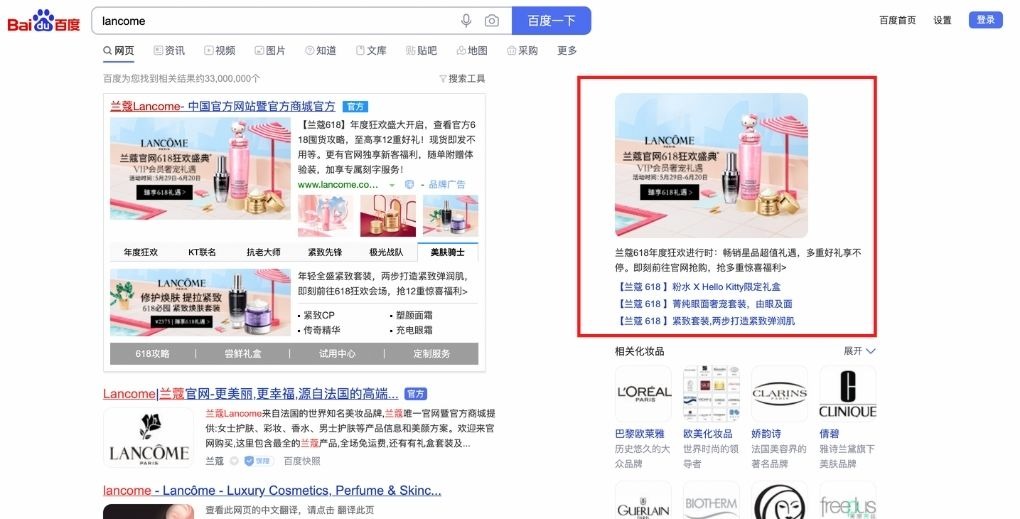
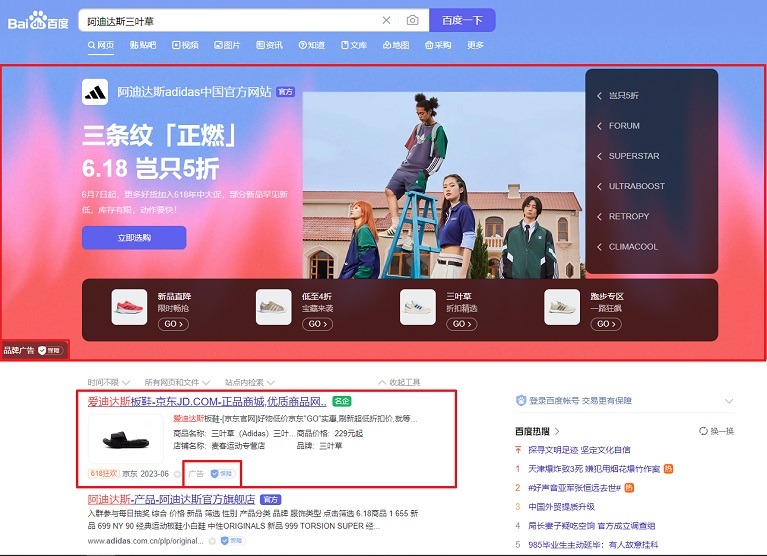
Baidu display advertising is everything outside the search results:
Banner ads
Native feed ads
Rich media units
In app placements across Baidu’s network
It is Baidu’s way of letting you reach people while they read news, browse forums or use apps, not only when they search.
If someone is not familiar with Baidu at all yet, it is better they start with our guide to Baidu search advertising in China or our beginner’s guide to Baidu advertising first. This article assumes the basics of search are clear.
Where Baidu display ads actually show
From a media planning perspective, Baidu display gives inventory across:
Baidu owned platforms like news and content feeds
Baidu Tieba forums
Baidu app inventory
Partner websites in the Baidu Union
Third party apps using Baidu ad tech
The exact list of placements changes over time, but the principle is stable: you buy access to audiences inside a large Chinese media network.
In our Baidu display ads audience guide we go deeper into who you can reach and how those audiences behave.
For marketers, the real questions are:
Which audience am I buying
In what context do they see my ad
How much control do I have over placements and exclusions
Baidu gives tools for all three, though the controls feel different compared to Google Display.

How Baidu display fits into a marketing funnel
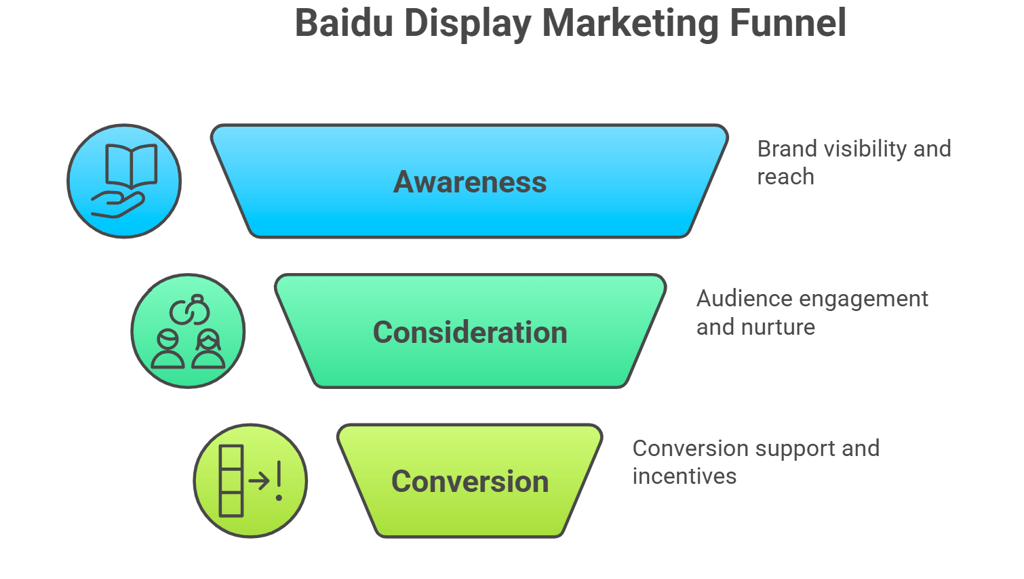
If you think in funnel stages, Baidu display has a clear job.
Top funnel: awareness and reach
Baidu display can:
Put your brand in front of new users who match your ICP
Drive traffic to content that educates the market
Warm up audiences before you reach them via search, social or email
If you are new in China, almost nobody is searching your brand yet. Buying targeted impressions is one way to seed that awareness.
Mid funnel: consideration and nurture
Display can also:
Retarget visitors who came from Baidu search or other channels
Promote case studies, webinars, guides and comparison content
Keep your brand visible while prospects are still researching
This is especially useful for B2B journeys that run over weeks or months.
Bottom funnel: conversion support
Display alone will not carry your performance target, but it can:
Remind users who abandoned forms or did not convert
Push time limited offers or extra incentives
Support sales teams by keeping the brand in front of in market accounts
The key for marketers: do not box Baidu display as “just awareness”. With the right audiences and creatives, it can drive pipeline as part of a blended strategy.
Targeting options that matter for marketers
Baidu has many switches, but the core targeting levers you will actually use are:
Contextual targeting
Interest and behaviour audiences
Demographic and geo filters
Retargeting
Sometimes similar or lookalike audiences
Contextual targeting
You choose content themes and environments that match your category, for example:
Industry news
Investment and finance topics
Education and overseas study
Technology and software
This keeps your message roughly aligned with what the user is doing.
Interest and behaviour audiences
Baidu builds audience segments based on:
Search behaviour
Content consumption
App and service usage
You can target audiences like:
Users interested in enterprise software
Users researching overseas study
Users consuming content about logistics or overseas property
We break down these audiences more clearly in our Baidu display ads audience guide.
Retargeting
This is usually the first step for performance focused marketers:
Build audiences of visitors to key pages
Exclude converted users where possible
Show reminder or deeper stage messages to everyone else
If you are already paying for clicks on Baidu search, using display retargeting is usually a sensible extension.
Filters
You can then layer:
Geography
Device type
Sometimes basic demographic constraints
So that spend stays in markets and segments you can realistically serve.
Baidu display vs Baidu search: how to think about it
Search and display do different jobs, this you probably already know ;)
Intent and mindset
Search users are showing intent. They literally type their need into Baidu.
Display users are doing something else. Your ad interrupts what they are reading or using.
So:
Search is for capturing existing demand at the bottom of the funnel.
Display is for creating, warming and nudging demand across the whole funnel.
Attribution and reporting
If you only look at last click:
Search will almost always look better than display.
Display will often look weak, even when it assists conversions earlier.
A more realistic view:
Judge search on last click CPA and direct lead volume.
Judge display on blended CPA, cost per engaged user and pipeline influence.
Our Baidu search content, such as Baidu search advertising in China, our Baidu Ads service overview and A beginner’s guide to Baidu advertising, covers how to make search work well. This display guide shows how to layer visual and audience based campaigns on top.
When Baidu display belongs in your media plan
Baidu display does not have to be in every plan, but it earns its place when:
You are already investing meaningfully in Baidu search
Your product has a long or complex buying cycle
You want more reach into specific Chinese audience segments
You want to retarget traffic coming from search, SEO or other channels
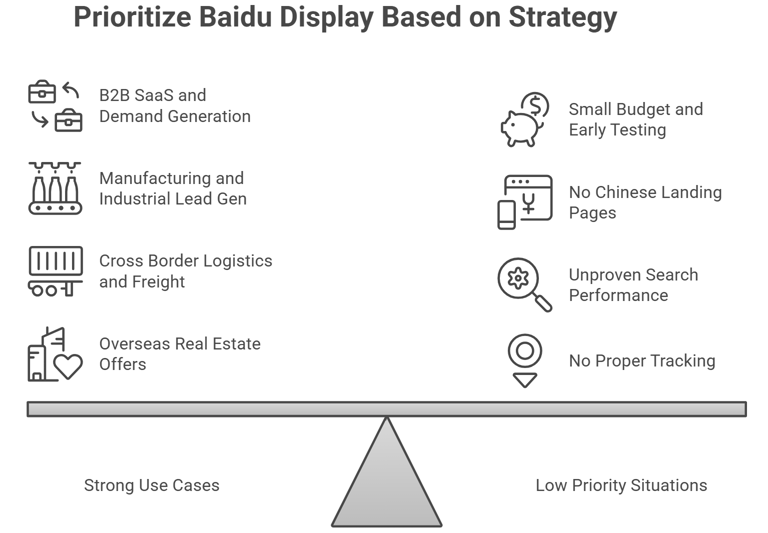
Strong use cases
B2B SaaS and demand generation
Manufacturing and industrial lead gen
Cross border logistics and freight
Overseas real estate, investment and education offers
Any high value product with research heavy decisions
We illustrate this kind of cross border intent in our guide to finding Chinese buyers in Dubai real estate.
Low priority situations
Baidu display is lower priority when:
Budget is very small and you are still in early testing mode
You do not yet have proper Chinese landing pages or tracking
You have not proven basic search performance
In those cases, focus on nailing Baidu search and the landing experience first, then add display as a second phase.

Creative and messaging: where marketers win or lose
Display performance is driven by creative and landing page fit.
Creative principles
For most B2B and high value B2C campaigns:
Lead with a clear Chinese headline that spells out the value
Use simple visuals that make it obvious what you do
Emphasise one main benefit or pain point
Add a direct CTA such as “Get a quote” or “Book a consultation”
Ask yourself:
Can someone scanning a feed understand this in one second
Does the click feel like a logical next step
We discuss copy and messaging patterns in more detail in our ad copy in China 2025 guide. Even though that piece focuses on search and text, the same clarity rules apply to display headlines and text overlays.
Landing pages
A strong Baidu display campaign needs landing pages that:
Load quickly for users inside China
Continue the narrative from the banner or native ad
Present one clear action: get a quote, download a resource, book a call
In our guide to high converting landing pages in China we break down layouts, proof elements and UX details that work best with Chinese visitors.
On the technical side, our article on generating leads in China without Google or Meta Ads explains why foreign hosting often causes slow loads and what to do about it.


Compliance and setup details marketers should know
China has stricter rules for some industries. You do not need to memorise the law, but you do need to know when to expect friction.
If you work in:
Healthcare
Finance and investment
Education
Certain professional services
then ad approvals and landing pages will be reviewed more closely.
In our Baidu Ads requirements in 2025 guide we walk through the documents and checks Baidu commonly asks for. It gives a good sense of what “compliant enough to run” looks like.
For companies without a Chinese legal entity, our article on advertising in China without a local entity outlines structural options agencies and brands use to still operate campaigns.
A simple Baidu display playbook for marketers
Here is a straightforward way to roll Baidu display into your mix.
Step 1: Stabilise Baidu search first
Make sure you can acquire leads at a sane CPA through search. Our pieces:
give a solid foundation for that.
Step 2: Set up tracking properly
Before scaling display, confirm you can track:
Page views and key events
Form submissions and calls
Conversions by campaign and audience
Without this, you will not know which Baidu display segments are carrying their weight.
Step 3: Start with retargeting
Begin with:
Audiences of recent site visitors
Separate lists for high intent pages if possible
Exclusion of converters
Serve:
Reminder ads
Offers to talk to sales, get a quote or download a guide
This usually produces the most efficient CPAs in display.
Step 4: Add prospecting audiences
Once retargeting is running:
Add interest based audiences aligned with your ICP
Layer contextual categories that match your industry
Use geo filters where your sales coverage is strongest
Our Baidu display ads audience guide explains which audience types are usually worth testing first.
Step 5: Test creatives and landing pages on a schedule
Plan to:
Test multiple creatives per audience
Rotate underperforming banners out regularly
Compare conversion performance across landing page variants
Display rewards consistent creative testing more than tiny bid tweaks.
Step 6: Scale if the blended numbers work
If you see:
Acceptable blended CPA across search plus display
Better conversion rates on retargeted cohorts
Clear influence of display on pipeline and revenue
then scaling Baidu display budgets becomes a defensible decision.
To explore additional channels and expansion paths, marketers can use our blog overview to jump into related topics like Haosou, Sogou, Naver, Yahoo Japan and Google alternatives.
Final takeaway for marketers
Baidu display advertising is not just a cosmetic banner channel. For marketers who already use Baidu search, it can:
Extend reach into defined Chinese audiences
Warm and nurture prospects over longer sales cycles
Support lead generation through retargeting and mid funnel content
Are you ready to expand your reach ?
Diversified Digital Strategies
Diversifying your paid media for APAC reach.
Choose DDS Media Services reliable & affordable partner for your Asia expansion strategy.
Connect
Grow
(+31) 644010794
© 2025. All rights reserved.
Pages